Soft Washing vs. Pressure Washing: Which Does Your Roof Need?
If you've noticed black streaks, green patches, or dark stains creeping across your roof, your first instinct might be to call for a pressure wash. In South Florida, that instinct can be an expensive mistake.
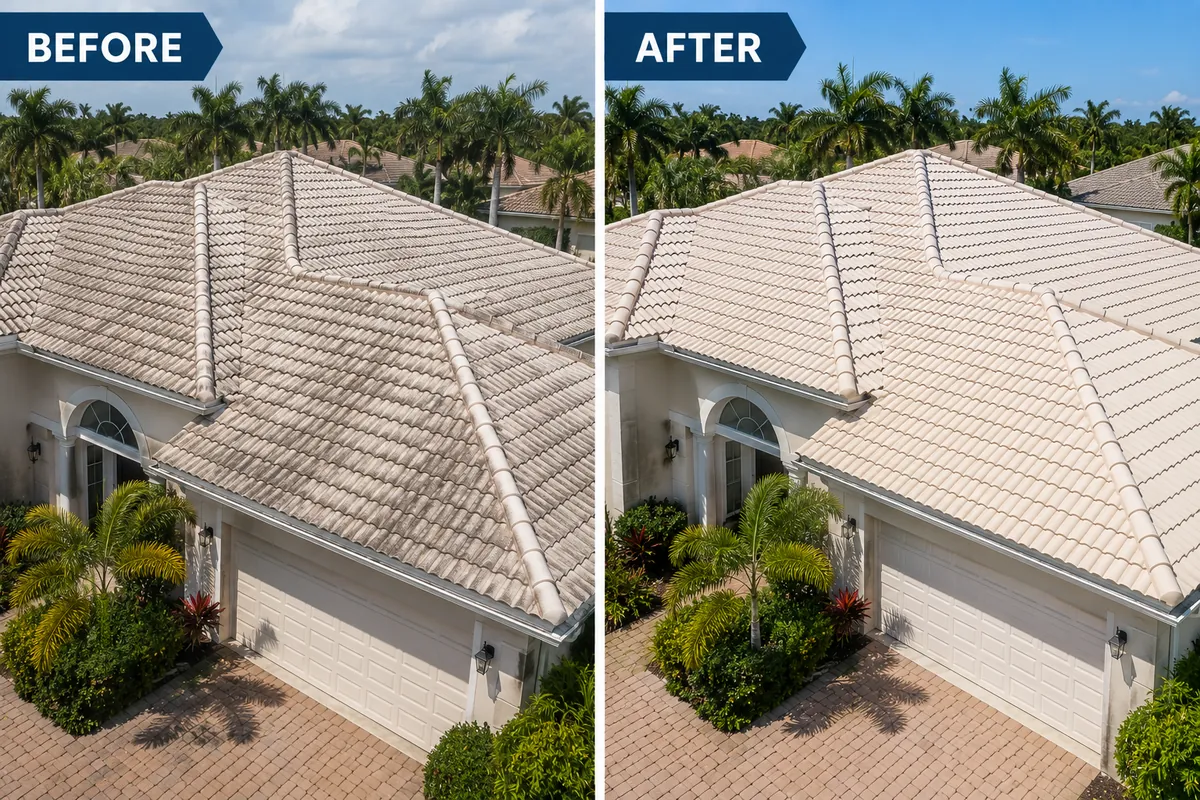
Roofs need a different cleaning approach than driveways, and using the wrong method can potentially shorten the life of your roof instead of helping protect it.
That's why understanding the difference between soft washing and pressure washing matters before anyone starts cleaning your roof.
Here's how the two methods differ, why high pressure can create problems for roofing materials, and why soft washing is generally the appropriate method for roof cleaning.
Roofs generally need soft washing, not high-pressure washing. Soft washing relies on low pressure and an appropriate cleaning solution to treat organic growth while reducing the risk of damage to shingles, tiles, and other roofing materials.
What's the Difference Between Soft Washing and Pressure Washing?
Although both methods are used for exterior cleaning, they work very differently.
Pressure Washing
Pressure washing uses high-pressure water to physically remove dirt, grime, and buildup from durable surfaces. It's commonly used on concrete driveways, sidewalks, and other hard surfaces that can tolerate stronger cleaning pressure.
Soft Washing
Soft washing uses much lower water pressure together with an appropriate cleaning solution. Instead of relying primarily on water force, the cleaning process treats algae, mold, mildew, and other organic growth before the surface is gently rinsed.
The important difference isn't simply how much water is being used. It's where the cleaning power comes from.
Pressure washing relies heavily on mechanical force. Soft washing relies more heavily on the cleaning treatment, allowing delicate exterior surfaces to be cleaned without exposing them to unnecessarily high pressure.
Why Is Pressure Washing a Roof Risky?
Roofing materials — whether asphalt shingles, tile, or metal — should be evaluated differently from concrete driveways and sidewalks.
Direct high-pressure water can be too aggressive for certain roofing systems and can potentially cause damage if the wrong equipment or technique is used.
Shingle Damage
Aggressive water pressure can loosen or remove protective granules from asphalt shingles, potentially affecting their condition and lifespan.
Tile Damage
Roof tiles can be vulnerable to cracking, chipping, or other damage when inappropriate pressure or technique is used.
Water Intrusion
High-pressure water directed into the wrong areas can potentially force moisture beneath roofing components where water isn't intended to go.
Warranty Concerns
Roofing manufacturers may specify approved cleaning procedures. Homeowners should review their particular roofing manufacturer's maintenance and warranty requirements before cleaning.
What Are Those Black Streaks on South Florida Roofs?
Those dark streaks aren't always ordinary dirt.
Black roof staining is commonly associated with Gloeocapsa magma, a type of cyanobacteria frequently seen as dark streaking on roofing materials.
Warm temperatures, moisture, and humid conditions can contribute to organic growth on exterior surfaces — which helps explain why roof discoloration is such a familiar sight across South Florida.
Homes in Pembroke Pines, Weston, Miramar, Davie, and surrounding South Florida communities experience year-round warmth, high humidity, frequent rain, and tropical landscaping. Shaded roof sections and areas that stay damp longer may show organic growth and discoloration sooner than areas receiving more direct sunlight.
Why Is Soft Washing the Better Choice for Roof Cleaning?
Soft washing is designed to clean surfaces where aggressive pressure isn't appropriate.
Instead of trying to blast visible staining away with water force, an appropriate cleaning treatment addresses the organic material while the roof is exposed to much lower pressure.
This approach helps reduce unnecessary mechanical stress on roofing materials while still addressing the algae, mold, mildew, and organic buildup responsible for much of the visible staining.
Don't choose a roof cleaning method based only on how dirty the roof looks. The roofing material, condition, age, surrounding landscaping, drainage, and type of buildup should all be considered before cleaning begins.
Why Does Soft Washing Matter Even More in South Florida?
South Florida's climate creates conditions where exterior organic growth can develop quickly.
Warm temperatures, high humidity, frequent rain, shade, trees, and moisture all contribute to an environment where algae, mildew, and other buildup can appear on roofing and exterior surfaces.
Simply removing what is visible without addressing the underlying organic growth may not provide the same result as using an appropriate treatment designed for that type of buildup.
What About the Rest of the House?
The same principle applies beyond the roof.
Different exterior surfaces require different cleaning methods. Stucco, painted siding, soffits, and screened enclosures generally require a more delicate approach than concrete or other durable hard surfaces.
Pressure washing still has an important place in exterior cleaning — it simply belongs on the right surfaces.
| Surface | Recommended Method |
|---|---|
| Roof — shingle, tile, or metal | Soft Washing |
| Stucco or painted siding | Soft Washing |
| Screened enclosures | Soft Washing |
| Concrete driveways | Pressure Washing |
| Paver patios & walkways | Pressure Washing* |
| Pool decks | Evaluate Surface |
*The appropriate method can vary based on material, condition, joints, coatings, paint, sealers, and other surface-specific factors. Wash Mode evaluates the surface before choosing a cleaning method.
If the surface can be damaged by aggressive water pressure, a lower-pressure cleaning process should be considered. Durable hard surfaces can often tolerate pressure washing, while roofing and delicate exterior finishes generally require a softer approach.
How Often Should You Soft Wash Your Roof in South Florida?
There isn't one perfect schedule for every South Florida roof.
How quickly staining returns depends on the property, roofing material, shade, nearby trees, moisture, drainage, and surrounding environment.
Homes with heavy tree cover, shaded roof sections, or properties near canals and lakes may notice visible organic growth sooner than homes with more sunlight and airflow.
Instead of cleaning a roof solely because a calendar says it's time, pay attention to its visible condition and the maintenance recommendations for your particular roofing material.
When Should You Consider Having Your Roof Cleaned?
It may be time to have your roof evaluated when you begin noticing:
- Black streaking becoming clearly visible from the street.
- Green or dark organic growth appearing on sections of the roof.
- Shaded sections becoming noticeably darker than sunny areas.
- Buildup becoming visible around roof features or areas near trees.
- An HOA or property-maintenance notice related to the roof's appearance.
- You're preparing to sell, photograph, or improve the exterior appearance of your home.
The Bottom Line: Soft Washing vs. Pressure Washing for Your Roof
If your roof has black streaks, green patches, or visible organic growth, soft washing is generally the appropriate cleaning approach — not aggressive high-pressure washing.
The goal isn't simply to make the roof look cleaner. It's to use a cleaning process appropriate for the roofing material while avoiding unnecessary pressure that could potentially cause damage.
Pressure washing remains extremely useful for durable surfaces such as concrete driveways and walkways. Your roof simply isn't your driveway — and it shouldn't be cleaned like one.
The Right Cleaning Method for Every Surface
Wash Mode is a small, owner-operated exterior cleaning business serving Pembroke Pines and nearby South Florida communities.
We evaluate the surface before choosing the cleaning method. That means using a lower-pressure approach where appropriate and professional pressure washing where the surface is designed to handle it.
Soft Washing & Roof Cleaning FAQs
Will soft washing damage my shingles?
Soft washing uses much lower water pressure than traditional pressure washing, making it the more appropriate approach for delicate roofing materials. The exact cleaning process should still be selected according to the roofing material, condition, and manufacturer's recommendations.
How long does roof soft washing take?
The time required depends on roof size, accessibility, roofing material, property conditions, and the amount of buildup present. Wash Mode can provide a more accurate estimate after evaluating the property.
Is soft washing safe for my landscaping?
Landscaping protection should be part of a professional exterior cleaning process. Surrounding plants and sensitive areas should be considered before cleaning, with appropriate preparation and rinsing used throughout the service.
Can I pressure wash my roof instead of soft washing it?
High-pressure washing can be too aggressive for many roofing materials. A lower-pressure cleaning process is generally more appropriate for roof cleaning because it reduces unnecessary mechanical force on shingles, tiles, and other roof components.
Does Wash Mode provide soft washing in Pembroke Pines?
Yes. Wash Mode provides exterior cleaning services in Pembroke Pines and nearby South Florida communities. We evaluate each surface and select an appropriate cleaning method based on the material and condition.
Not Sure What Your Roof or Property Needs?
Wash Mode evaluates each surface individually and chooses the appropriate cleaning approach — whether that means a lower-pressure cleaning method for a delicate surface or pressure washing for a durable driveway.
Get your free exterior cleaning estimate.