Is Pressure Washing Bad for Your House? Common Myths Debunked
Pressure washing is not automatically bad for your house — but using too much pressure, the wrong nozzle, or the wrong method on a delicate surface can cause real damage. The key is matching the cleaning method to the material.
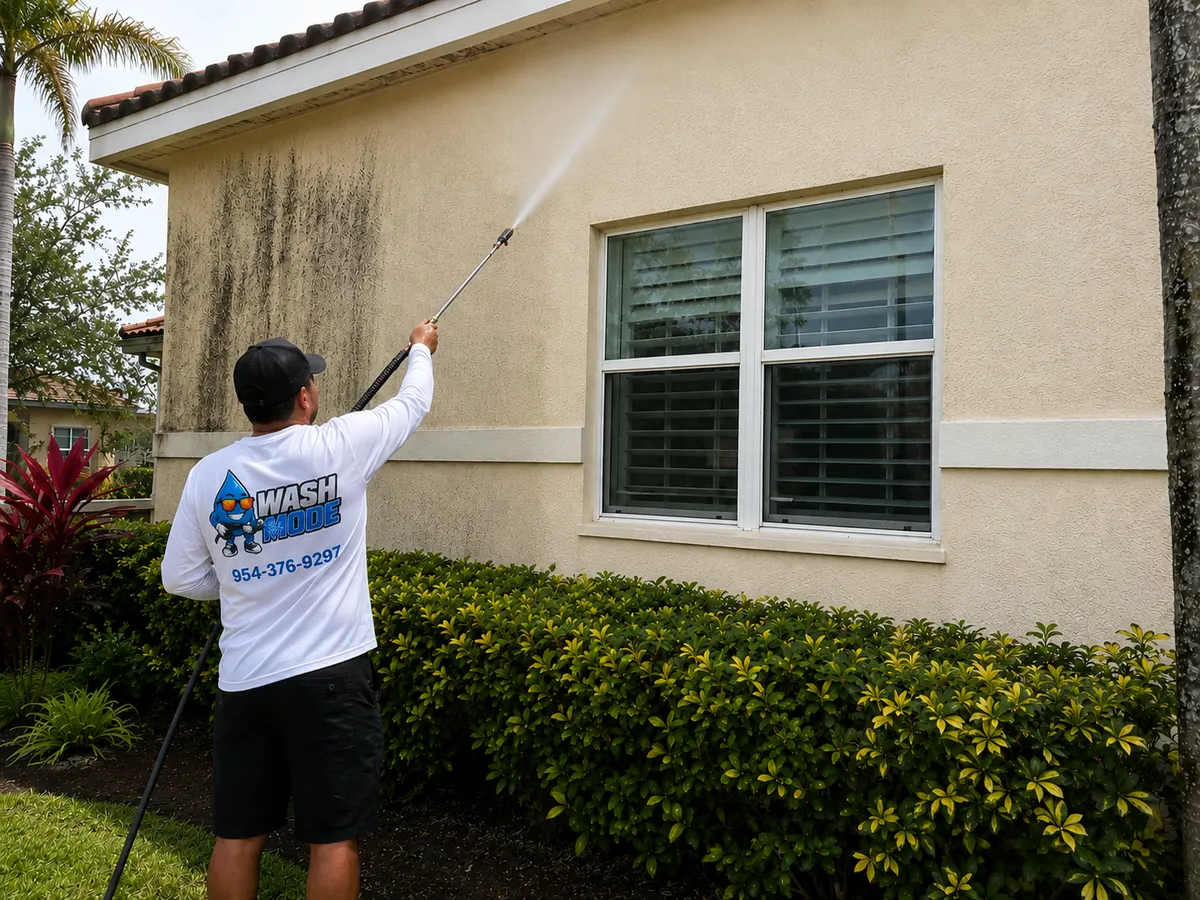
The short answer is no — pressure washing is not inherently bad for a house. Problems happen when high pressure is used where a lower-pressure cleaning method would be more appropriate.
Concrete, stucco, painted surfaces, siding, soffits, roofs, screens, windows and pavers do not all respond the same way to water pressure. Treating every exterior surface like a driveway is where many problems begin.
Below are the most common myths homeowners hear about pressure washing, what is actually true, and how Wash Mode approaches exterior cleaning in Pembroke Pines and surrounding South Florida communities.
Pressure washing can be safe when it is used on the right surface with appropriate pressure, distance and technique. Delicate materials such as roofing, painted stucco, siding and some exterior finishes often benefit from soft washing or another lower-pressure cleaning approach instead.
Myth #1: Pressure Washing Always Damages Siding or Stucco
This is not automatically true. Damage usually comes from excessive pressure, holding the nozzle too close, using an aggressive tip, or spraying into vulnerable seams and openings.
Many house exteriors do not need strong mechanical force to get clean. A lower-pressure wash combined with an appropriate cleaning solution can often remove algae, mildew, dirt and organic buildup without subjecting the surface to unnecessary stress.
If the surface can be damaged by aggressive water pressure, the goal should be to let the cleaning treatment do more of the work and use only the pressure needed to rinse safely.
Myth #2: More PSI Means a Better Cleaning
Higher pressure does not automatically mean a better result. PSI is only one part of an exterior-cleaning system.
Effective cleaning also depends on the right solution, dwell time, water flow, nozzle selection, distance from the surface and the type of buildup being removed.
Pressure
Too much pressure can damage paint, stucco, siding, screens and other exterior finishes.
Cleaning Solution
Organic growth is often better treated chemically than simply blasted away with water force.
Dwell Time
Allowing the treatment to work can reduce the amount of mechanical force needed.
Distance & Technique
Nozzle distance, angle and movement all affect how much force reaches the surface.
Myth #3: You Should Pressure Wash Your Roof
This is one of the most important myths to correct. Roofs should not be treated like concrete.
Shingles, tiles and other roofing materials can be vulnerable to unnecessary mechanical force. High pressure may loosen granules, damage coatings, crack fragile tiles, or force water into areas where it does not belong.
For roof cleaning, a lower-pressure soft-washing approach is generally more appropriate than aggressive pressure washing. The exact method should still be selected based on the roofing material, condition and manufacturer guidance.
Myth #4: Pressure Washing Will Force Water Into Your House
Water intrusion is possible when water is directed aggressively toward vulnerable areas, but that does not mean every exterior wash will force water indoors.
Windows, door seals, vents, electrical fixtures, soffits, damaged caulking and other openings require attention. A professional cleaner should identify sensitive areas and avoid directing unnecessary force into them.
- Avoid spraying directly into window and door seals.
- Use controlled pressure around soffits and vents.
- Protect electrical fixtures and sensitive exterior components.
- Evaluate damaged caulking, loose trim or existing exterior defects.
Myth #5: Pressure Washing Will Remove Good Paint
Properly bonded paint should not simply fall off because a home is professionally cleaned with the correct method.
However, already-loose, peeling, chalking or deteriorated paint may reveal existing problems during cleaning. Excessive pressure can also create damage where a gentler method should have been used.
Cleaning does not create every paint problem it reveals. If a coating is already failing, washing may expose loose areas that were previously hidden under dirt or organic buildup.
Myth #6: Every Part of the House Should Be Cleaned the Same Way
This is where the difference between pressure washing and soft washing matters most.
A driveway may tolerate a very different process than painted stucco, vinyl siding, screens or a roof. The safest approach is to evaluate each material separately.
| Surface | Typical Approach |
|---|---|
| Concrete driveway | Pressure Washing |
| Stucco / painted exterior | Lower Pressure / Soft Wash |
| Roof | Soft Washing |
| Screen enclosure | Evaluate Surface |
| Pavers | Evaluate Surface |
The appropriate method can vary based on material, condition, paint, coatings, sealers, joints, age and other surface-specific factors.
Why This Matters More in Pembroke Pines and South Florida
South Florida homes experience year-round warmth, humidity, frequent rain, irrigation and tropical landscaping. Those conditions can allow algae, mildew and other organic growth to become visible quickly.
Because much of that staining is organic, the best solution is often not simply “more pressure.” Proper treatment can remove the buildup while reducing the amount of force placed on the surface.
Homes near lakes, canals, mature landscaping or shaded areas may see exterior growth sooner. Walls repeatedly hit by sprinklers and sections with less sunlight can also stay damp longer and develop visible discoloration faster.
What Can Go Wrong With Improper Pressure Washing?
When pressure is used incorrectly, the damage can be more expensive than the cleaning itself.
Paint Damage
Excessive force can strip or scar painted exterior surfaces.
Stucco Damage
Aggressive cleaning can damage fragile or already-deteriorated stucco finishes.
Water Intrusion
Poor technique can direct water behind siding, around windows or into openings.
Screen Damage
High pressure can tear screens or loosen fragile enclosure components.
Plant Damage
Landscaping can be affected if cleaning solutions and rinsing are not handled carefully.
Surface Marks
Uneven wand technique can leave visible lines or “zebra stripes” on concrete and other hard surfaces.
Is DIY Pressure Washing Safe?
A homeowner can safely clean some exterior surfaces with the right equipment and technique, but rented or consumer pressure washers can still damage property when used incorrectly.
One common mistake is assuming that visible dirt should be removed by moving the wand closer to the surface. That increases impact force and can quickly damage paint, wood, stucco, siding or seals.
Another mistake is cleaning the entire property with one nozzle, pressure setting and technique.
What Does a Safer House-Washing Process Look Like?
- Identify the exterior material before cleaning.
- Inspect paint, stucco, windows, seals, fixtures and landscaping.
- Select pressure based on the surface rather than using one setting everywhere.
- Treat organic buildup instead of relying only on water force.
- Protect and rinse surrounding plants and sensitive areas.
- Use stronger pressure only on surfaces designed to handle it.
The Bottom Line: Is Pressure Washing Bad for Your House?
No — pressure washing itself is not automatically bad for your house. The risk comes from using too much pressure or using pressure washing on surfaces that require a gentler approach.
Concrete and other durable surfaces can often tolerate professional pressure washing. Roofs, painted stucco, siding, screens and delicate exterior finishes generally require more caution and may be better suited to soft washing or another lower-pressure method.
The safest approach is not choosing between “pressure washing” and “soft washing” as if one method is always better. It is choosing the right method for each surface.
The Right Pressure for the Right Surface
Wash Mode is a local, owner-operated exterior cleaning business serving Pembroke Pines and nearby South Florida communities.
We evaluate the surface before choosing the cleaning method. That means using lower pressure where appropriate and professional pressure washing where the surface is designed to handle it.
Pressure Washing Safety FAQs
Is pressure washing bad for siding?
Pressure washing is not automatically bad for siding, but excessive pressure or spraying into seams can cause damage or water intrusion. A lower-pressure cleaning process is often more appropriate for siding and other delicate exterior materials.
Is pressure washing bad for stucco?
Stucco should be cleaned carefully. Aggressive pressure can damage fragile finishes, especially if the stucco is cracked, deteriorated or painted. The cleaning method should be adjusted to the condition of the surface.
Is pressure washing bad for a roof?
High-pressure washing can be too aggressive for many roofing materials. Soft washing or another lower-pressure approach is generally more appropriate for roof cleaning.
Can pressure washing damage windows?
Excessive pressure directed at seals, frames or damaged caulking can potentially cause problems. Windows should be cleaned with controlled pressure and attention to vulnerable areas.
Can pressure washing remove paint?
Excessive pressure can damage paint. Cleaning may also reveal paint that was already peeling, chalking or poorly bonded before the service.
Is soft washing safer than pressure washing for a house?
Soft washing is often more appropriate for delicate exterior surfaces because it relies on lower water pressure and a cleaning treatment. Pressure washing still has an important place on durable surfaces such as concrete.
Does Wash Mode pressure wash houses in Pembroke Pines?
Wash Mode provides exterior house cleaning in Pembroke Pines and nearby South Florida communities. We evaluate each surface and use the cleaning method appropriate for the material and condition.
Not Sure Whether Your House Needs Pressure Washing or Soft Washing?
Send Wash Mode your address and a few exterior photos. We'll review the surfaces and recommend the cleaning approach that makes sense for your property.
Get your free exterior cleaning estimate.